
Dairy & Food Production
Design of dairies and food plants, both new plants and extensions built while production continues.
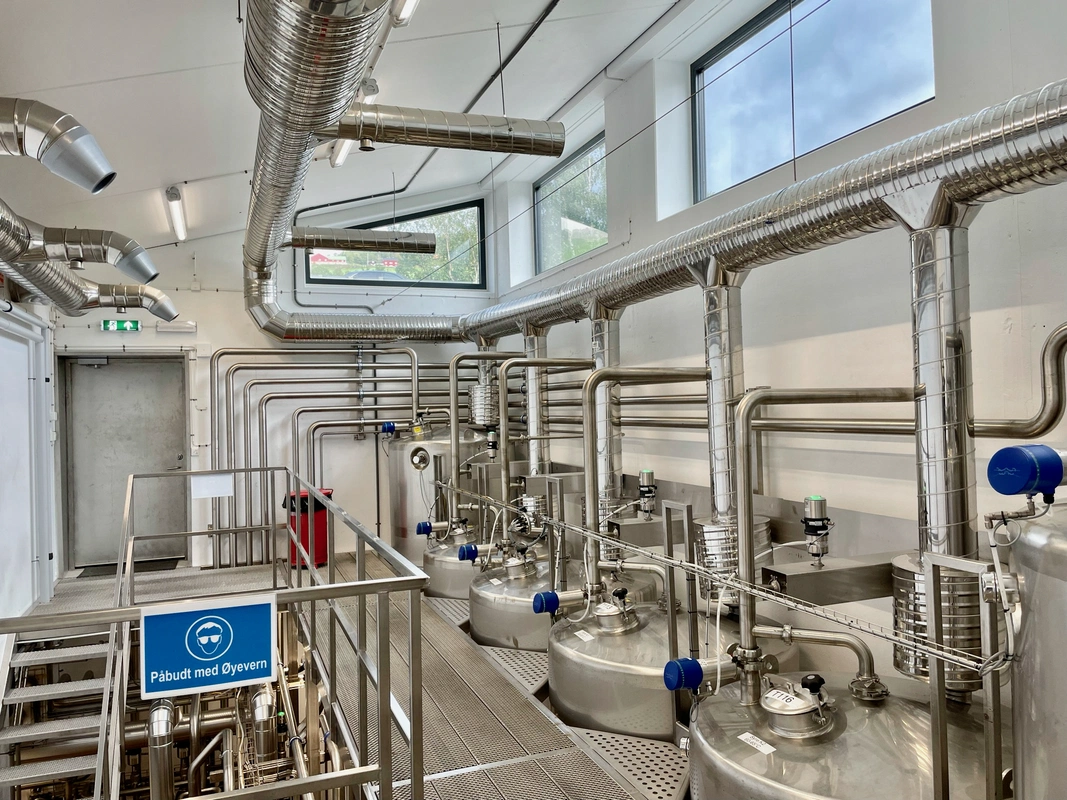
In a dairy, hygiene governs the layout. Raw, pasteurised and packaged areas are separated by controlled air pressure, dedicated staff routes and material airlocks - zoning is the organising principle of every layout.
We design dairy and food-production facilities from craft-scale traditional dairies to masterplanned multi-line plants. Craft dairies make traditional and niche products, where process precision and product identity matter more than volume. Masterplan-driven expansions let active plants grow line by line, with structural grids and utilities sized for capacity that may arrive over a decade.
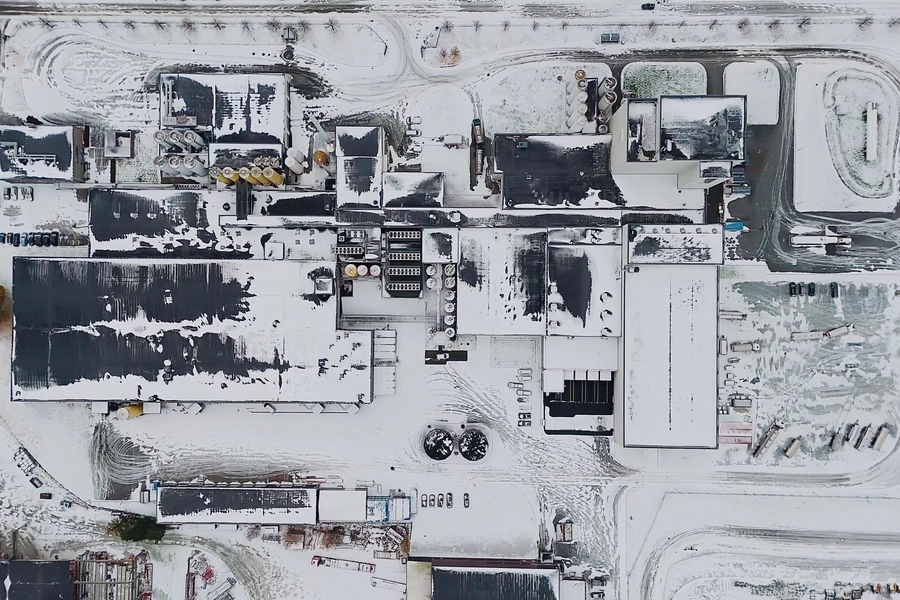
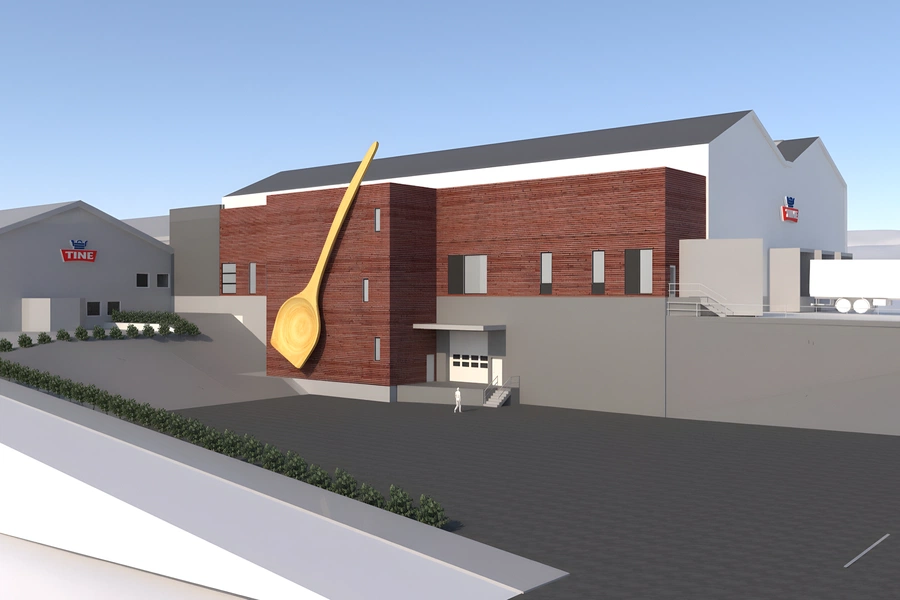
Brownfield extensions add capacity to plants that cannot stop. Sequencing and temporary works keep existing lines running while new capacity is built, tested and commissioned in parallel. The TINE Verdal dairy has grown this way since 1992 - stage by stage within one masterplan, including a dedicated re-zoning of the plant, without stopping production.
Food-production facilities must meet strict and constantly changing regulatory requirements while running at high flow. That is decided at the drawing stage.
Hygienic zones and CIP
Process rooms are grouped by hygiene level, with material airlocks and staff locks at every transition. The office coordinates the CIP routes with the process supplier and the food safety consultant, so cleaning reaches every line and the zones are fixed before detailed design.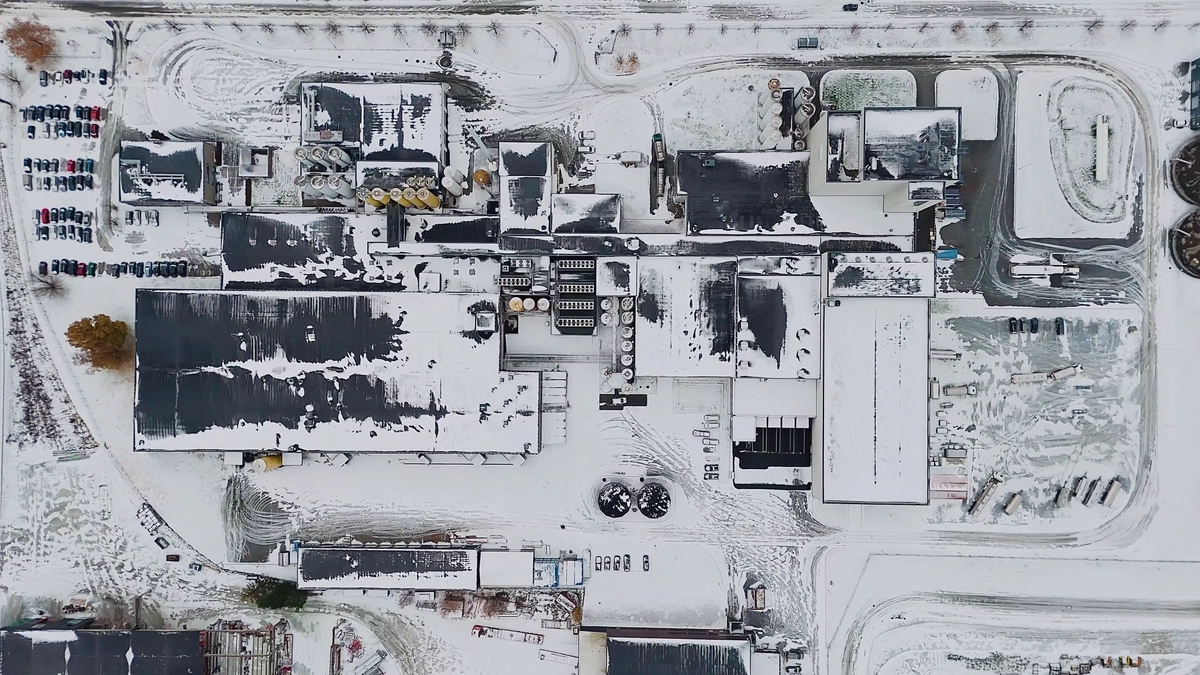
A corridor zone for goods, staff and services
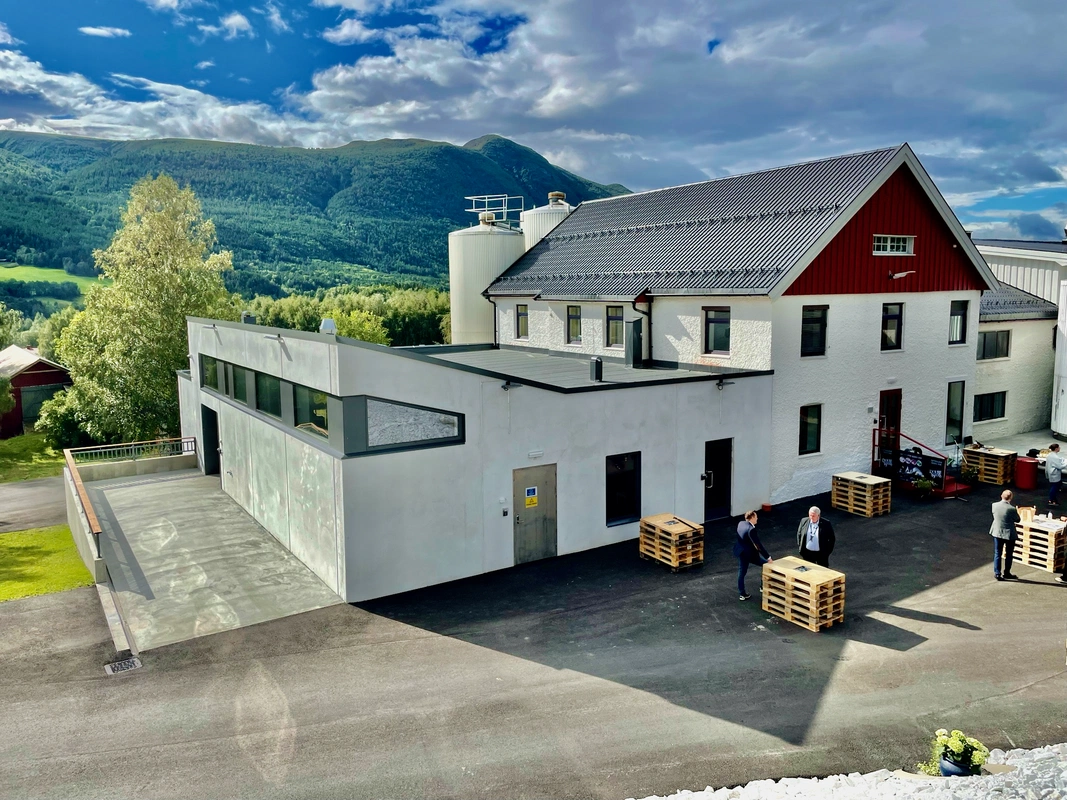
At TINE Tretten, an extension of about 3,600 m² designed and built between 2015 and 2020, a corridor zone continues the existing corridor through the building. Goods, staff and technical services run on separate routes within it, and the zone allows the plant to be extended further in both directions.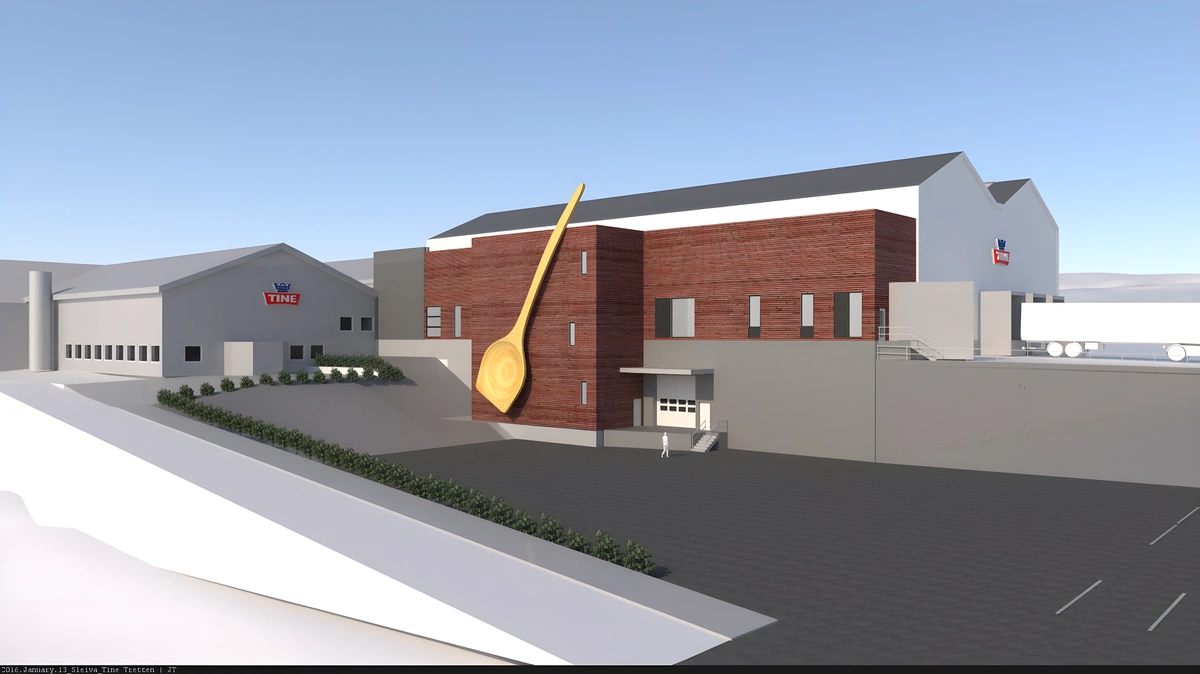
A dairy extended over four decades
TINE Verdal has been extended in stages since the 1980s to about 21,000 m². The consumer milk plant was extended by 1,520 m² in 1992 and the white cheese department by 580 m² in 1994. Later stages added a reception hall, butter production, technical centres and a drying plant of about 9,600 m².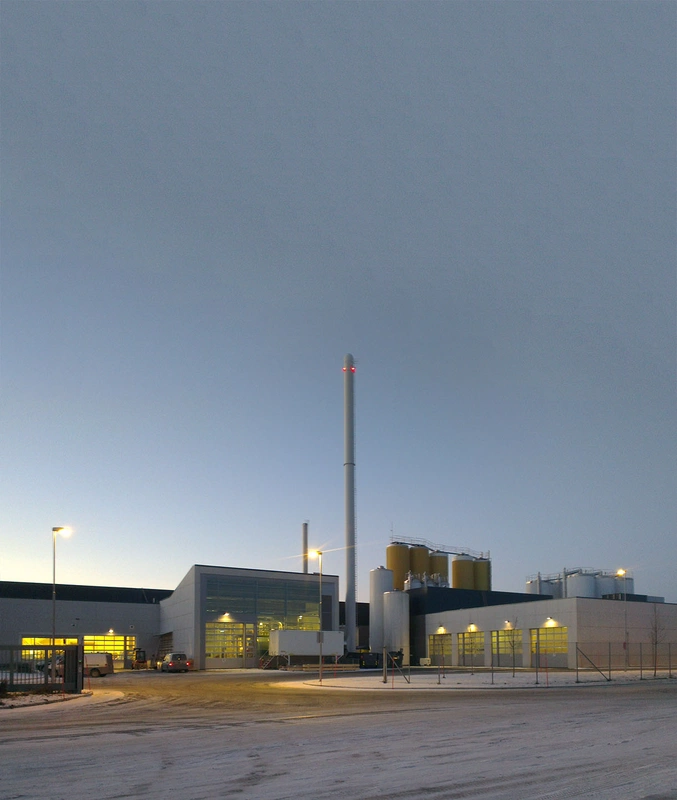
Dairies for TINE and abroad
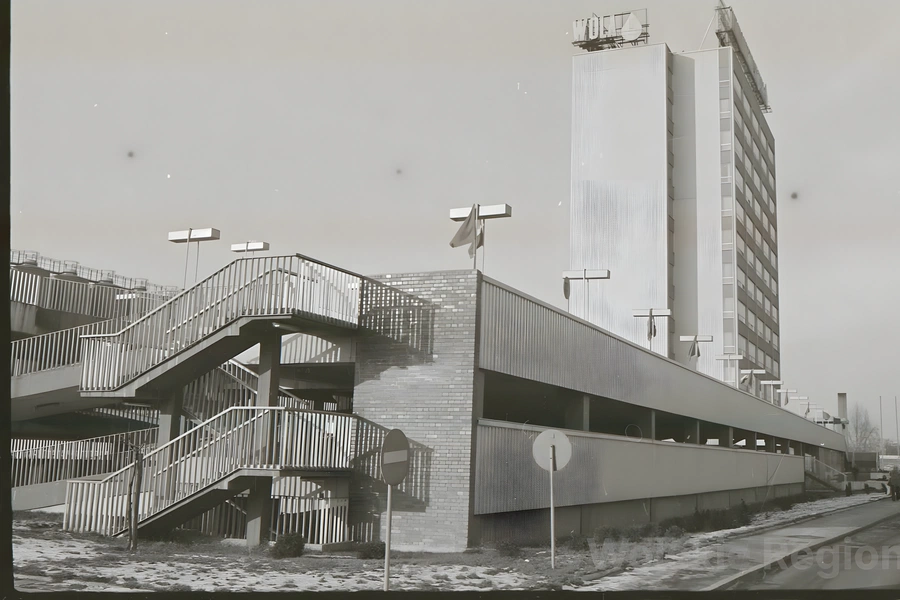
The office has designed dairies for TINE since the 1980s, at Verdal, Tretten and Dovre. In Poland, the office designed the Wola dairy in Warsaw, built between 1974 and 1976.